
The Courage of Being Different
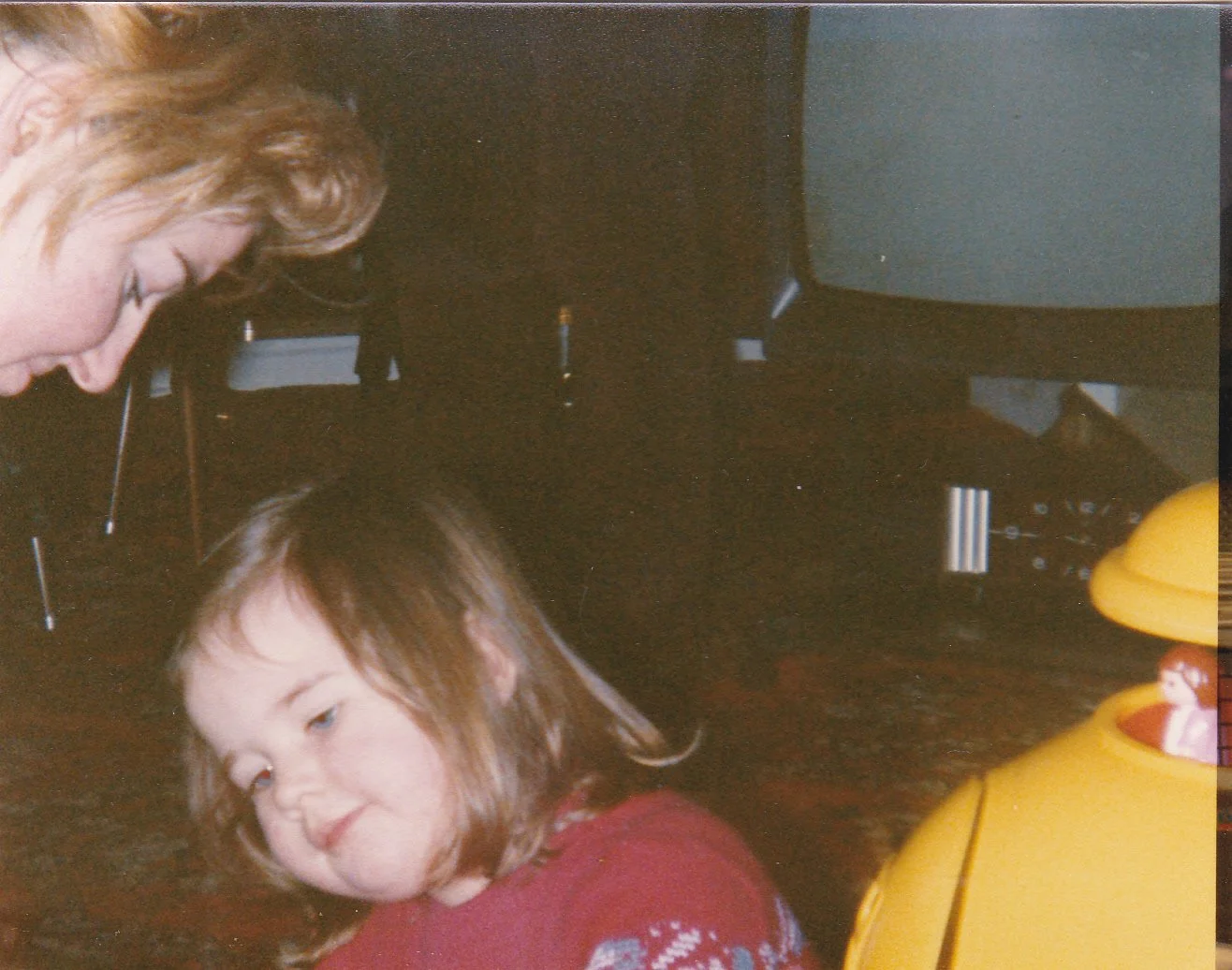
Me (3) with my Big Yellow Teapot.
Growing up in a working‑class environment in the west of Scotland, people who are a bit different stand out. I mean really stand out. You could be in a paper shop and see a wee man buying rolls in a bow tie and smoking jacket. I've spent bus journeys talking to strangers about their interest in elephants. Or BSA Bantams (a type of motorbike, in case you’re wondering).
One of the many paths that drew me to being a therapist was that people have always told me their stories. My husband often comments that I can be standing in B&Q and, before I know it, someone has shared intimate details about their life while we mull over paint colours. These colourful characters pop up every now and then in our communities like flowers blown in on the breeze from a random seed. They might not look like they fit, but there they are.
Part of me always wants to know how they got there, what made them take up the space they do, and where they found the courage to do so even when it made them stand out. Biologically, we’re programmed to follow the herd, to be seen as part of the gang so we don’t stick out or get left behind. It’s a primal safety mechanism. Our nervous systems are primed for familiarity, and we’re cautious of anything or anyone who seems different.
In my parents’ and grandparents’ generation, people were less accepting than we are now. Awareness was limited. The systems surrounding people who were “different” looked very different too. I don’t know anyone from that era who didn’t have a family member described as “eccentric”: a “weird aunt” who never married and collected strange things, or an uncle who walked the same route at the same time every day.
I also heard people comment on them in less than favourable ways. “An oddball,” and other words I won’t repeat. These little throwaway lines send signals that there’s something wrong with being different. It’s funny how they unconsciously shape how we perceive difference in ourselves.
But on the flipside, there were communities that welcomed and appreciated these people as part of the fabric of everyday life. “Oh, that’s just the way John is -you know that wee man!” Another message was sent: that I didn’t have to understand everything about them to know they were okay. That I was safe to say hello and be polite.
Those early childhood impressions shape how we treat people, and also what feels safe to present to the world. I often think of the people who lived on the edges of socially acceptable behaviour. Today, the medical model would likely have diagnosed them with something. But back then, they were simply “a person,” and how the community responded shaped their experience far more than any label could.
I don’t want to go down the nostalgic route of “it was better back then,” because honestly, who knows? People were less aware; they didn’t have access to the same information or support. But maybe some of them didn’t need it. Maybe they were simply living their lives in the way that felt right to them.
From birth, we’re given developmental milestones, but there are also social milestones that are less spoken about. We’re put on a trajectory of what’s appropriate to say, do, or be. Some of this is useful, it keeps society from descending into chaos, but these expectations can also restrict growth if we internalise them.
There are “typical” things to be interested in. “Normal” small‑talk topics. Predictable conversational patterns. When children go to school and are thrust into groups, they begin noticing these patterns, even unconsciously. Groups form around similarity. So what happens to the ones who aren’t into the status quo?
They’re left with a choice: mirror what’s safe to talk about, or speak about their real interests at the risk of being shut down or worse -exiled from the group. That’s a big risk for a child. Being left out is one of the most threatening experiences to the nervous system.
And group mentality can be brutal. Sometimes you’re exiled just for associating with the outlier. This plays out in families too -the black sheep, the spirited one, the person who marches to the beat of their own drum. There’s tremendous courage in being your own person, but it can also be lonely.
Some people simply feel there’s no other way for them to be. They don’t fit into any group. Maybe the only place they’ve ever really fit is inside themselves.
It’s draining to abandon yourself and shapeshift into whatever others want. The goalposts constantly move. It feels unnatural. And people can sense it. They might like you behaving a certain way because it serves them, but they don’t trust it.
I speak now to the people who learned early that compliance meant safety. The ones who grew up in families or communities where being anything other than “easy” wasn’t an option. The ones with special interests or quirks that didn’t feel age‑appropriate or socially acceptable.
I remember my first year of secondary school, feeling bereft at the idea that I shouldn’t play with toys anymore. That strange in‑between age where swinging on a swing was suddenly uncool. No one wanted to hear every fact about dolphins; they wanted to talk about boys they fancied.
I spent a lot of time sitting inside a bush in my garden, pretending to be alone like a sulky teenager, when really I was visiting the magical den of my childhood. I couldn’t admit it to myself then, but that place brought something to my nervous system that I didn’t understand.
As we move through life, our sense of self gets shaped by these unspoken rules. And unless we pause and check in, we simply go along with them. But it doesn’t have to be that way. You can begin to unravel the tangle and find what feels most natural to you.
Who decided we all had to like the same things or move at the same pace? Society made these rules. They’ve served it well — predictability, control, selling us things we don’t need. But a person who is content within themselves is unshakable.
I remember the phrase “being full of yourself” being used as an insult. Recently, I’ve been looking at it differently. Imagine being so full of everything you love, so secure in yourself, so supported by your environment, that it’s safe to be full of yourself. Content. At peace. Without lack.
So how do you unpick all this conditioning?
It doesn’t happen at once. It starts gently, with awareness and with care. Small choices. Taking up space in tiny ways. Choosing what you want, even at the risk of disappointing others.
I notice what happens in my body when I disconnect from myself through people‑pleasing. A tightness. Sometimes in my throat, sometimes all over. My body knows something is off. I don’t always have the time or clarity to know what to do, but it’s information. A message that something isn’t aligned with my natural self.
My work , and the work I do with others , is to find a way through that honours the part of me that wants something different. I don’t need to shout or create conflict. I just need to pay attention.
Everyone has the right to be who they are in this lifetime. People deserve to have their stories heard. Curiosity about another person’s inner world is, in my opinion, the highest form of love.
It says that YOU matter. I want to know what lights you up.
At a birthday party last weekend, I ended up in the kitchen, as I always do, and started talking to a stranger. Within minutes we’d found a shared niche interest in marine life, and suddenly I was learning about sea mice (which aren’t actually mice , they’re worms).
It was joyous. A tiny moment of connection with someone who saw me, the real me, without effort. And that feeling , that spark in my chest , reminded me of sitting in my childhood den. That, right there, is regulation. Not a 20‑minute breathwork class, but the simple act of connecting with yourself and another person who genuinely wants to meet you.
The you that isn’t pretending.